One of the year’s most anticipated meteor showers is about to return to the night sky, beginning a weeks-long buildup to what could be an especially favorable peak in August.
The annual Perseid meteor shower will be active from July 17 through Aug. 24 and is expected to peak overnight Aug. 12 into Aug. 13, according to the American Meteor Society’s 2026 Meteor Shower Calendar. While the peak remains about a month away, the start of the shower marks the beginning of Earth’s annual passage through debris associated with Comet 109P/Swift-Tuttle.
What Causes the Perseid Meteor Shower?
The bright streaks seen during a meteor shower are created when small particles of comet debris enter Earth’s atmosphere at high speeds. As those particles travel through the atmosphere, they produce the flashes of light visible across the night sky.
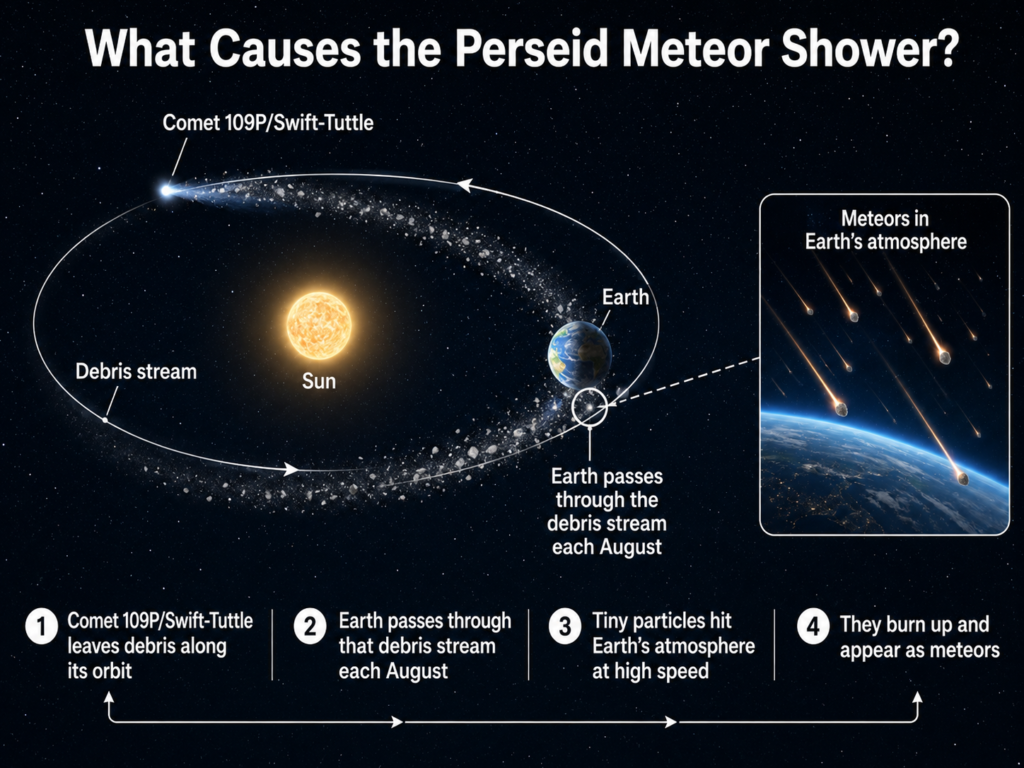
NASA identifies Comet 109P/Swift-Tuttle as the source of the debris that produces the Perseid meteor shower. The comet last passed through the inner solar system in 1992, but debris spread along its orbit continues to produce the annual shower. More information about Swift-Tuttle is available through NASA’s comet profile.
The Perseids take their name from the constellation Perseus because the meteors appear to originate from that general area of the sky. Meteor showers are typically named for the constellation or star near their apparent point of origin, according to NASA’s overview of meteor showers.
NASA describes the Perseids as one of the best meteor showers of the year, known for fast and bright meteors that can leave long trails of light and color behind them. Under favorable conditions, the shower can produce roughly 50 to 100 visible meteors per hour near its peak, according to NASA’s Perseid meteor shower guide. Actual viewing conditions, including sky brightness and artificial light, can significantly affect how many meteors an observer sees.
The Show Builds Over Several Weeks
The arrival of the Perseids does not mean the sky will suddenly fill with meteors on July 17. Activity builds gradually as Earth moves through the debris stream, meaning skywatchers may begin spotting occasional Perseid meteors before the August peak, though activity during the opening days of the shower will be much lower.
The American Meteor Society lists the Perseids as active through Aug. 24, with peak activity expected Aug. 12 and 13. For observers, patience is often as important as timing. A meteor may flash across the sky in a fraction of a second, followed by several quiet minutes before another appears.
No telescope is required to watch a meteor shower. Because meteors can appear across a broad portion of the sky, NASA recommends viewing with the unaided eye rather than using a telescope’s narrow field of view. Additional viewing information is available through NASA’s Perseid guide.
Why 2026 Could Offer Favorable Conditions
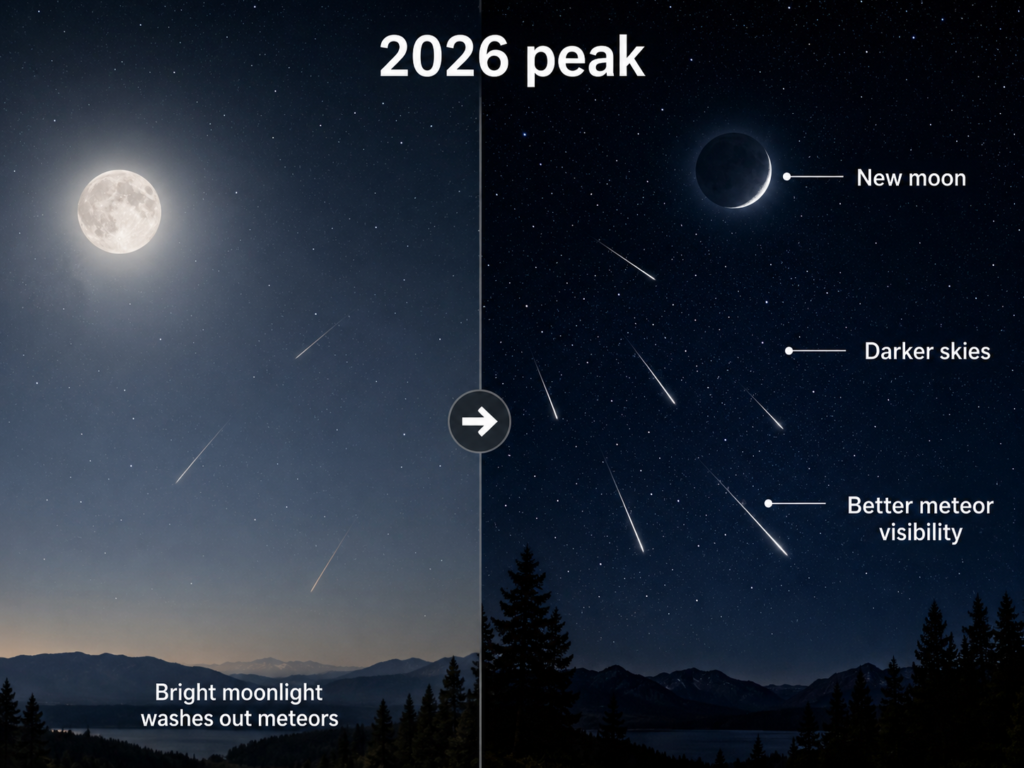
This year’s Perseid peak is particularly notable because of the moon. The International Meteor Organization’s 2026 Meteor Shower Calendar notes that a new moon will occur Aug. 12, providing favorable observing conditions around the Perseid maximum.
NASA has also highlighted the 2026 Perseids as one of the year’s notable astronomical events, pointing to the new moon as a reason skywatchers could have excellent viewing opportunities, weather permitting. NASA included the Perseids in its 2026 astronomical events preview.
Bright moonlight can wash out fainter meteors and reduce the number visible to observers. A darker sky during the 2026 peak could make it easier to see more of the shower, particularly from areas away from artificial lighting. That does not guarantee a spectacular display over Northern Colorado, as cloud cover, wildfire smoke and local light pollution can still affect visibility on any particular night, but the absence of significant moonlight removes one of the major obstacles meteor watchers sometimes face.
Northern Colorado Skywatchers Have Time to Prepare
For now, residents do not need to set an alarm or make a late-night drive specifically for the Perseids. The shower is only beginning, and its strongest activity remains weeks away. Those who regularly spend time outside after dark may begin spotting occasional Perseid meteors as July progresses and Earth moves farther through the debris stream.
The main show is expected in August. As the peak approaches, the Johnstown Republic will publish a local viewing guide with the best times to watch, updated Northern Colorado weather conditions and tips for finding darker skies near the Johnstown area.
For now, the Perseids are just getting started, and the best is still to come.