With Halloween less than three weeks away, Johnstown families preparing to welcome trick-or-treaters may notice that filling the candy bowl costs considerably more than it did just a few years ago.
A national study released by FinanceBuzz found that Halloween candy prices have increased 71% since 2021, more than three times the overall inflation rate during the same period. However, a comparison of current online prices at Walmart and Sam’s Club shows that package size and promotional pricing can make a substantial difference in what shoppers pay.
Halloween Candy Prices Outpace Inflation
According to the September 30 study by FinanceBuzz, the average cost of 100 pieces of assorted Halloween candy has climbed from $9.91 in 2021 to $16.96 in 2026, an increase of $7.05.
The study examined historical and current prices from Walmart, Target, Kroger, and Albertsons, using archived weekly advertisements and retailer websites. Researchers analyzed at least 25 candy assortments annually and calculated average prices per piece, using regular retail prices rather than promotional discounts.
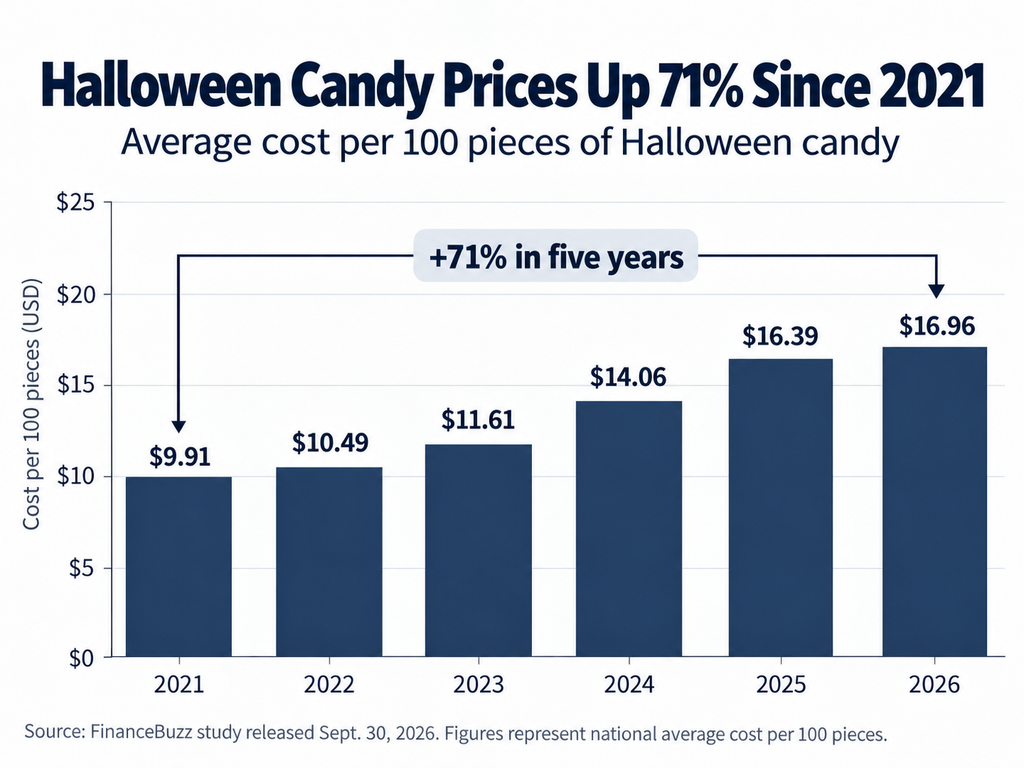
The largest increases occurred between 2023 and 2025, when the average cost per 100 pieces rose from $11.61 to $16.39. Price increases have slowed more recently, with the study finding a 3.5% increase from 2025 to 2026.
Over the full five-year period, Halloween candy prices increased substantially faster than overall consumer prices, which rose approximately 22%, according to the study.
Comparing Candy Prices at Walmart and Sam’s Club
A comparison of October 2026 online candy listings provides a closer look at what families shopping in the Johnstown area might expect to spend.
Walmart listed a 120-piece Halloween candy assortment for $19.98, equivalent to approximately 16.7 cents per piece. A larger 200-piece Mars chocolate assortment containing M&M’s, Snickers, Twix, and Milky Way candies was listed for $24.87, reducing the cost to approximately 12.4 cents per piece.
At Sam’s Club, a 290-piece Mars Halloween assortment was advertised for $26.98, discounted from its regular price of $29.98. The promotional price works out to approximately 9.3 cents per piece, with the sale advertised through October 31.
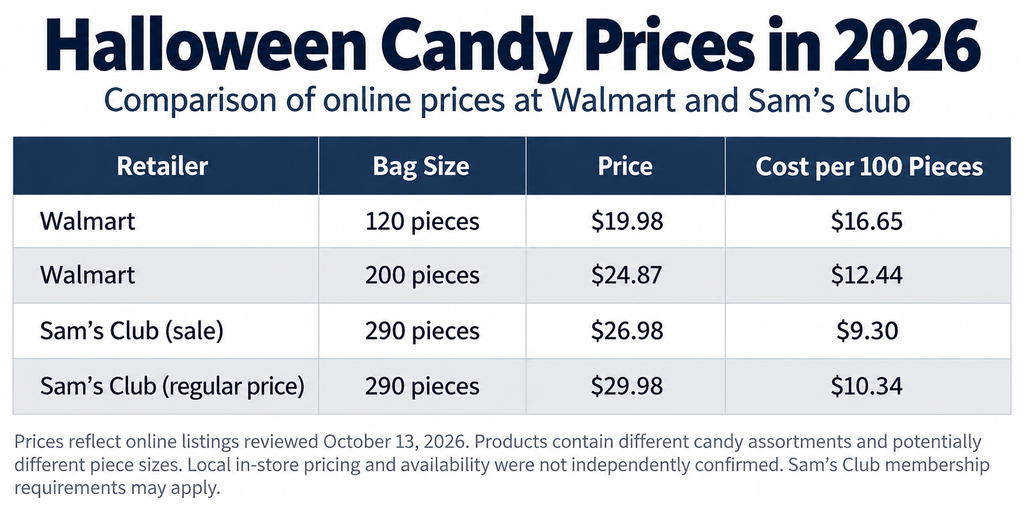
The comparison illustrates how significantly package size and promotional pricing can influence the cost of Halloween candy. The 290-piece Sam’s Club assortment contains 90 more pieces than Walmart’s 200-piece package while costing just $2.11 more at its advertised sale price.
However, shoppers should consider more than the number of pieces when comparing products. Different assortments contain different candy sizes, and the lowest cost per piece does not necessarily mean the lowest cost per ounce.
What Does This Mean for Johnstown Families?
The number of trick-or-treaters a household expects can make a significant difference in its Halloween candy budget.
Using the national study’s average of $16.96 per 100 pieces, a household expecting 200 trick-or-treaters would spend approximately $33.92 to provide one piece of candy per visitor. A household expecting 300 visitors would spend approximately $50.88.
Families offering two pieces per child could see those costs double, depending on the products purchased. These estimates are based on national average prices rather than actual spending by Johnstown households.
Buying larger packages or shopping advertised promotions can lower the cost per piece, although purchasing more candy than needed could eliminate some of the potential savings.
Why Has Candy Become So Expensive?
The rising price of Halloween candy is part of a broader increase in confectionery costs driven by higher ingredient prices and disruptions to global agricultural production.
In a September 2026 analysis published by the U.S. Bureau of Labor Statistics, economist Natalie Ho examined factors contributing to rising candy prices, including weather-related disruptions affecting cocoa and sugar production.
Cocoa-producing regions in West Africa have faced difficult growing conditions and supply shortages, contributing to higher costs for chocolate manufacturers. Sugar production has also been affected by drought and other weather conditions in major producing countries.
According to the federal analysis, the Consumer Price Index for candy and chewing gum increased 32% between December 2019 and November 2024. During that same period, producer prices for confectionery ingredients increased 87.6%, reflecting significant cost pressures on candy manufacturers.
The report also notes that manufacturers have responded to higher costs through price increases and smaller package sizes. These changes can leave consumers paying more for candy while receiving less product.
How Families Can Stretch Their Halloween Budgets
With October 31 approaching, families looking to control candy spending may benefit from comparing multiple package sizes rather than selecting the bag with the lowest overall price.
Buying larger quantities can reduce the cost per piece, particularly in neighborhoods where hundreds of trick-or-treaters are expected. Store promotions can also make a difference, although shoppers should consider membership requirements and travel costs when comparing retailers.
Non-chocolate candy assortments may offer less expensive alternatives, while planning around the expected number of visitors can help households avoid purchasing more candy than necessary.
Although national candy prices have risen substantially over the past five years, the current retail comparisons show that the amount households actually spend can vary considerably. For Johnstown families preparing for Halloween, comparing package sizes, candy varieties, and promotional prices may help keep costs manageable.