Johnstown residents could eventually stop changing their clocks twice a year after the U.S. House of Representatives approved legislation that would make daylight saving time permanent across most of the country.
The House passed H.R. 139, known as the Sunshine Protection Act, on July 14 by a bipartisan vote of 308–117. According to the House Committee on Energy and Commerce, the measure would establish daylight saving time as the national year-round standard while allowing states that do not currently observe it to remain exempt. The proposal is not yet law and must still pass the U.S. Senate and be signed by the president before any changes could take effect.
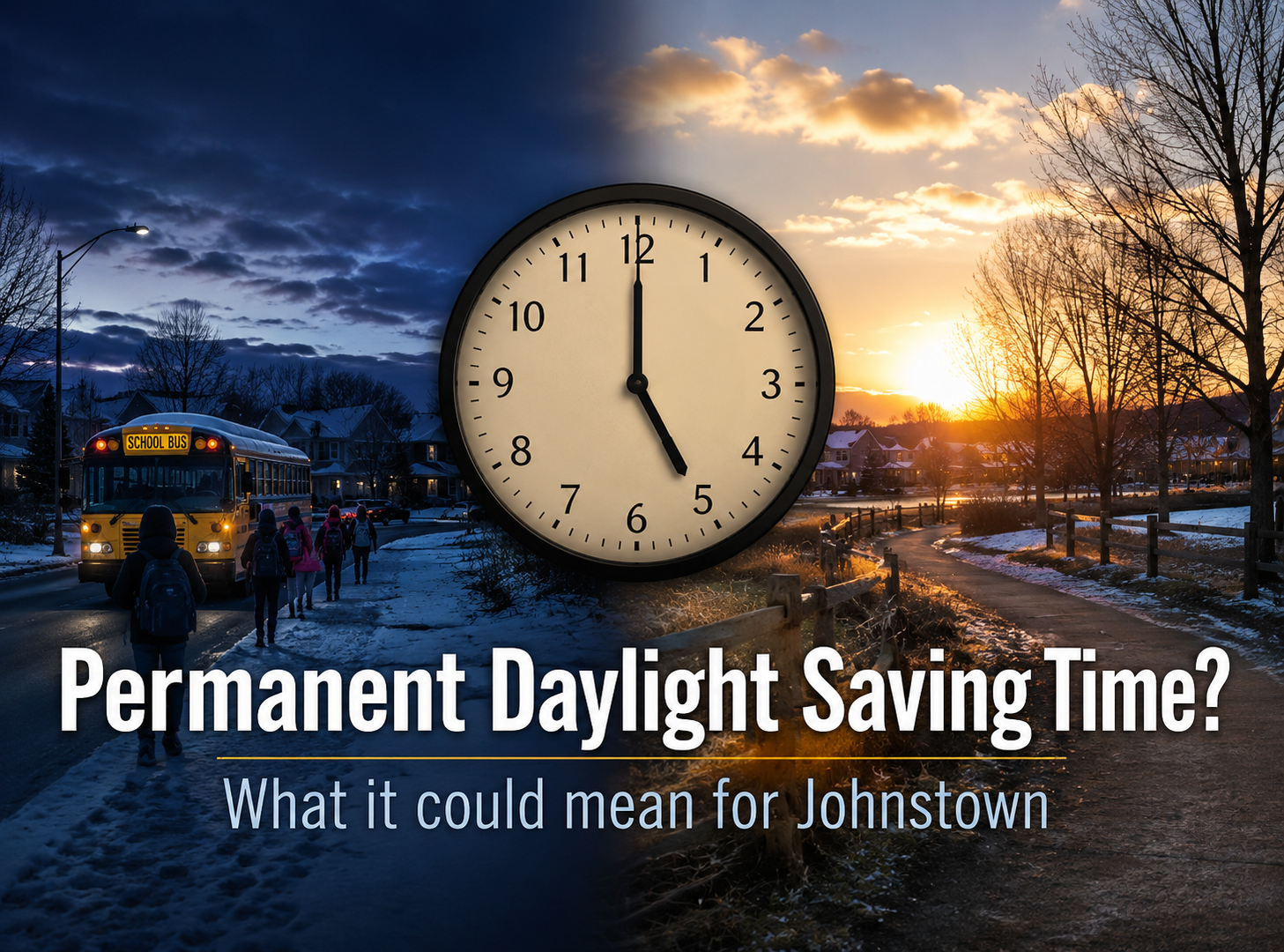
For Johnstown, the most noticeable difference would come during the winter. Summer schedules would remain unchanged, but sunrise and sunset would occur about an hour later from November through early March.
What would change in Johnstown?
Colorado currently observes daylight saving time from the second Sunday in March through the first Sunday in November, then returns to Mountain Standard Time during the winter. Under permanent daylight saving time, the state would remain on its summer clock throughout the year, eliminating both the November “fall back” and the March “spring forward.”
According to sunrise and sunset data for Johnstown, sunrise around the winter solstice currently occurs shortly after 7:15 a.m., with sunset at about 4:35 p.m. Under permanent daylight saving time, sunrise would occur shortly after 8:15 a.m. and sunset at about 5:35 p.m. The total amount of daylight would remain the same, but more of it would fall later in the day.
That shift would mean many Johnstown residents would begin work or school before sunrise during the darkest part of the year. It would also mean an additional hour of daylight in the late afternoon and early evening.
Darker mornings for schools and commuters
Later winter sunrises could affect students waiting for buses, teenagers driving to school and families traveling during the morning commute. Construction crews, agricultural workers, delivery drivers and others who begin their workdays early could also spend more time operating in darkness.
Critics of permanent daylight saving time have focused on those darker mornings, particularly the potential effects on visibility and student safety. The United States previously adopted year-round daylight saving time in 1974 during an energy crisis, but the policy quickly became unpopular, in part because of concerns about children traveling to school before sunrise. Congress ended the experiment early.
Supporters of the current proposal argue that transportation, commuting patterns and school practices have changed since the 1970s. They also say ending the twice-yearly clock changes would eliminate a routine disruption that many Americans consider unnecessary.
More daylight after work and school
The tradeoff for darker mornings would be later winter sunsets. Instead of darkness arriving shortly after 4:30 p.m. in December, Johnstown could remain light until approximately 5:30 p.m.
That additional evening light could provide more time for outdoor recreation, youth sports, shopping, dining and other activities after work or school. Supporters of permanent daylight saving time have also argued that later sunsets could benefit businesses that rely on afternoon and evening customers while giving families more usable daylight at the end of the day.
The change would not create more daylight, but it would alter when residents experience it. For many people, the question is whether morning light or evening light is more valuable during the winter months.
Colorado already passed a conditional law
Colorado lawmakers approved their own permanent daylight saving time legislation in 2022. House Bill 22-1297, signed by Gov. Jared Polis on June 2, 2022, established Mountain Daylight Time as Colorado’s intended year-round standard. The full text of the enacted law is available through the Colorado General Assembly.
The law cannot take effect unless federal law first allows states to observe daylight saving time throughout the year. It also requires at least four other states in the Mountain Time Zone to adopt permanent daylight saving time. Colorado’s law identifies Arizona, New Mexico, Utah, Wyoming, Montana and the portion of Idaho within the Mountain Time Zone as relevant to that requirement.
Once those conditions are met, the governor must notify the Colorado revisor of statutes. The change would then begin at 2 a.m. on the first Sunday in November following that notification. If the Sunshine Protection Act becomes federal law, Colorado officials would still need to determine whether the state’s remaining requirements have been satisfied.
The debate is also about which time should be permanent
Ending seasonal clock changes and making daylight saving time permanent are separate policy questions. Permanent daylight saving time would provide later sunsets and darker mornings, while permanent standard time would preserve more morning light but bring earlier sunsets during the winter.
The American Academy of Sleep Medicine recommends permanent standard time, arguing that it is more closely aligned with natural circadian rhythms. The organization supports ending the twice-yearly clock change but opposes making daylight saving time permanent.
Supporters of permanent daylight saving time place greater value on evening light and the additional time it could provide for recreation, commerce and family activities after work or school. The disagreement is therefore not simply about whether clocks should stop changing, but about which schedule should remain in place throughout the year.
What happens next?
The Sunshine Protection Act now moves to the Senate, which could approve the House bill, amend it or take no action. Any Senate amendments would generally require another House vote before the legislation could be sent to the president.
Until the federal process is complete and Colorado’s legal requirements are met, Johnstown residents will continue changing their clocks under the existing schedule. For Johnstown, permanent daylight saving time would bring a clear tradeoff: more winter daylight in the evening, but later sunrises and darker mornings.
What Do You Think?
Should Colorado adopt permanent daylight saving time, permanent standard time or continue changing clocks twice a year?